
Cómo elegir la envasadora de flujo horizontal adecuada para su negocio
Blog de la máquina HFFS

Si busca soluciones de automatización de envases, póngase en contacto con nosotros y estaremos encantados de ofrecerle la solución más adecuada a sus necesidades.
Executive Summary
Selecting the right horizontal flow packing machine is no longer just about speed; it is about balancing Total Cost of Ownership (TCO) with operational flexibility. The core decision matrix involves three critical technical choices:
1.Film Loader: Top reel for high-speed solid items vs. Inverted (bottom reel) for soft/loose products.
2.Cend Sealing: Rotary cutting for speed vs. Reciprocating (Box Motion) for hermetic sealing and MAP packaging.
3.Servo control: Upgrading to servo drives for filling and packaging to minimize film waste and enable smart automation.
This guide provides a structured technical analysis for distributors and factories looking to upgrade their HFFS flow wrap machines.
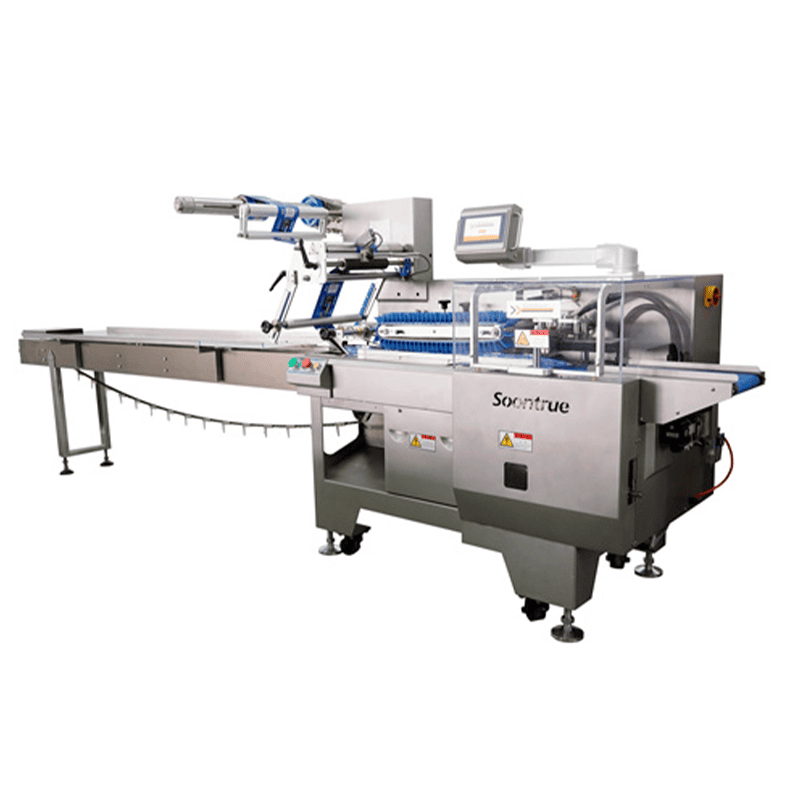
1. Assessing Your Product Characteristics: The Starting Point
Before evaluating machine specifications, you must audit your product's physical state. A common mistake in packaging machine design is selecting a standard machine for a non-standard product.
Physical State & Handling
- Solid & Regular: Products like biscuits, chocolate bars, and soap bars are rigid. They can be pushed by a chain lug system without deformation. These are ideal for standard pillow pack packaging machines.
- Loose, Sticky, or Multi-pack: Fresh noodles, sticky rice cakes, or multipacks of vegetables cannot be pushed. They require a machine that transports the product on top of the film to reduce friction and breakage.
- Fragile or Deformable: Products like croissants or soft cakes require gentle handling to maintain their aesthetic appeal inside the pillow bag.
Dimensions & Variations
- Your packaging line solutions must accommodate your largest and smallest SKUs.
- Bag Length: Servo-control machines offer a wider adjustable range than mechanical cam machines.
- Product Height: This is often the limiting factor. Standard jaws may handle up to 80mm height; anything taller (like a loaf of bread) requires a specialized box motion flow wrapper.
2. Film loader: Top Film Loader VS Bottom Film Loader
The position of the film loader dictates how the product is transported. This is the most fundamental distinction in HFFS flow wrap machines.
Standard Top Reel Flow Wrapper
In this configuration, the film is fed from above the product. The product is pushed by a lug chain into the forming tube.
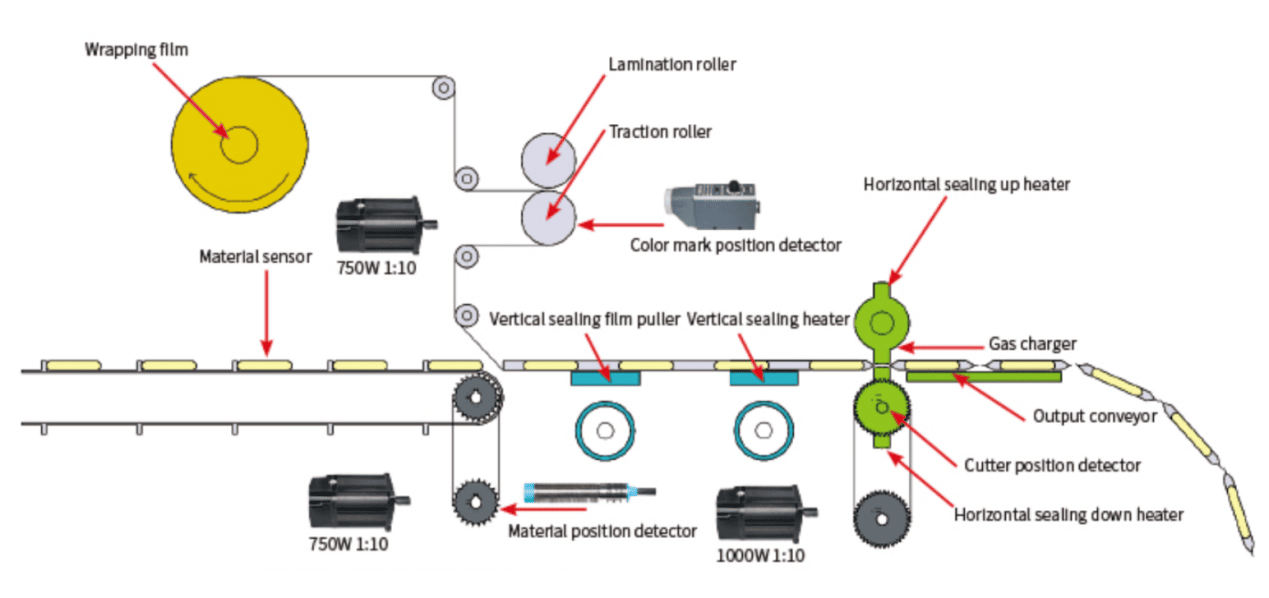
- Best For: High-speed production of consistent, solid items (e.g., biscuit packing machine applications).
- Pros: Higher speeds (up to 500+ packs/min), stable film tension control.
- Cons: Not suitable for sticky or loose items that might drag against the machine bed.
Inverted (Bottom Reel) Flow Wrapper
Also known as a "lower reel" machine, the film is fed from the bottom. The product sits directly on the film, which acts as a conveyor belt.
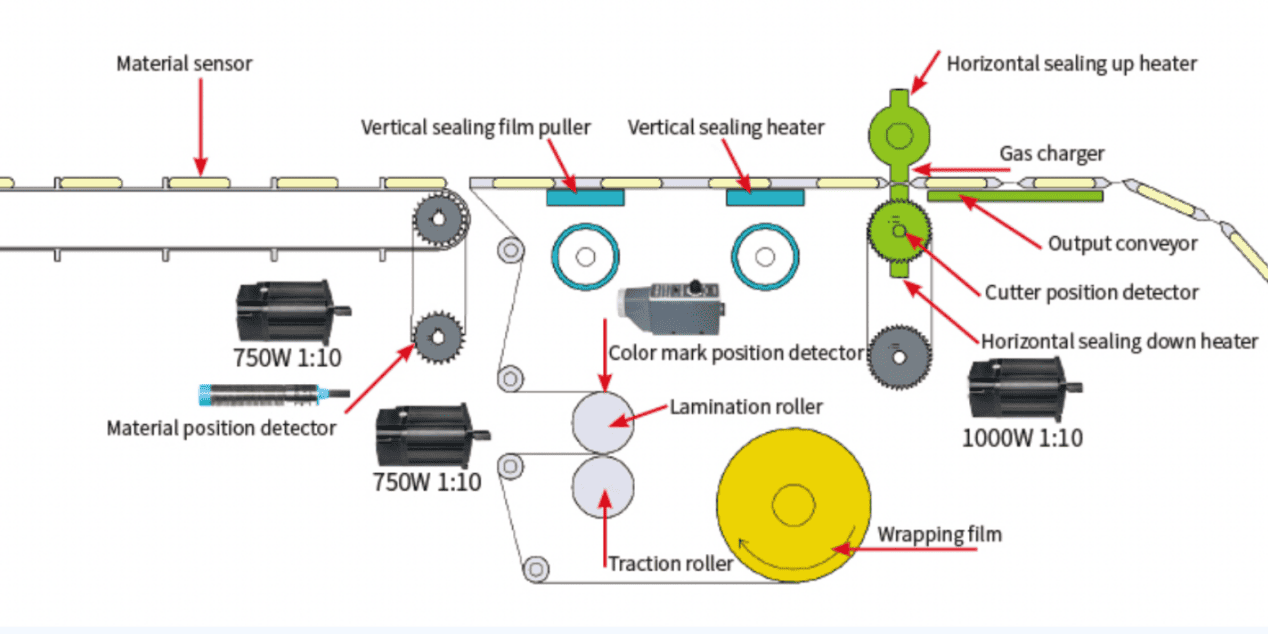
- Best For: Soft, irregular, or multipack items (e.g., fresh herbs, disposable cutlery, vegetable packaging).
- Pros: Handles difficult products without a pushing lug; reduces product damage.
- Cons: Generally runs at slightly lower speeds than top reel versions due to film drag dynamics.
| Feature | Top Reel Wrapper | Inverted (Bottom Reel) Wrapper |
| Film Feed | From Above | From Below |
| Product Transport | Pushed by Chain Lug | Carried by Film |
| Ideal Products | Biscuits, Candy, Trays | Leafy Greens, Tortillas, Sticky Buns |
| Speed Potential | Very High | Medium to High |
3. Cutting Systems: Rotary vs. Box Motion (Reciprocating)
The sealing jaw technology defines your machine's speed limit and sealing quality. This is critical when deciding between a high speed flow wrapper and a hermetic sealing machine.
Rotary Motion Cutting
The sealing knife disc (knife holder) rotates at high speed, synchronously performing heat sealing and cutting actions with the packaging film on the conveyor belt.
- High Speed: High packaging speed and significant efficiency.
- High Precision: Precise bag length control and stable sealing quality.
- Material Saving: Uses a rotary cutter to reduce material waste.
- Strong Adaptability: Suitable for high-speed production lines and various materials.
- Applications: Suitable for liquids, pastes, granules, powders, etc., especially ideal for production lines requiring high speed.
Reciprocating (Box Motion) Cutting
The sealing knife holder moves up and down in a reciprocating motion to complete sealing and cutting.
- Good flexibility: Easy to adjust, suitable for products of different sizes and shapes.
- Cost: The manufacturing and operating costs are relatively high.
- Moderate speed: Slower than rotary type machines.
- Suitable for: Solid, block-shaped, and regularly shaped products, especially suitable for packaging applications with frequent product changes or a wide variety of products.
Pro Tip:If you prioritize high efficiency and high output, and the packaging materials are suitable, choose a rotary type machine.
If speed is not a primary concern, you need flexibility to adapt to different products, choose a reciprocating type machine.
4. Drive Technology: Why Servo Drives for Filling and Packaging Matter
In 2026, the industry standard is shifting from mechanical frequency conversion to Full Servo Drive Systems. While mechanical machines are cheaper initially, motion control components offer superior long-term ROI.
Precision and Control
A full servo machine typically uses 3 independent motors: one for film feed, one for the infeed conveyor, and one for the end seal jaws.
Benefit: This allows for precise digital control over bag length and sealing position. You can adjust parameters on the touchscreen without mechanical tools.
Smart Packaging Features
Servo drives for filling and packaging enable intelligent features that mechanical machines cannot offer:
- No Product & Packaging: Sensors detect if a product is missing from the infeed. The machine pauses the film and sealing jaws, preventing empty bags. This saves thousands of dollars in film waste annually.
- Anti-Cutting (Misplaced Product Detection): If a product is out of position and under the jaws, the servo motor detects the resistance and instantly reverses the jaws. This prevents the knife from cutting the product and protects the cutter assembly.
- Auto-Splicing: For high-volume lines, servo systems can synchronize with auto-splicers to change film rolls without stopping the machine.
5. Hygiene & Food Safety Standards
For food distributors and factories, compliance is non-negotiable. When evaluating packaging machine design, look for:
- Stainless Steel Construction: Ensure the frame is made of SUS304 or SUS316 stainless steel, especially for frozen food packaging or dairy environments.
- Open Frame Design: The machine should allow debris to fall through to the floor rather than getting trapped in the frame. This minimizes bacterial growth points.
- IP65 Wash-down Rating: If your facility requires high-pressure water cleaning, ensure the electrical cabinets and servo motors are rated IP65 or higher.
6. Automation Integration: From Standalone to Packaging Lines
A horizontal flow packing machine is rarely an island. To maximize efficiency, consider how it integrates into broader automated packaging systems.
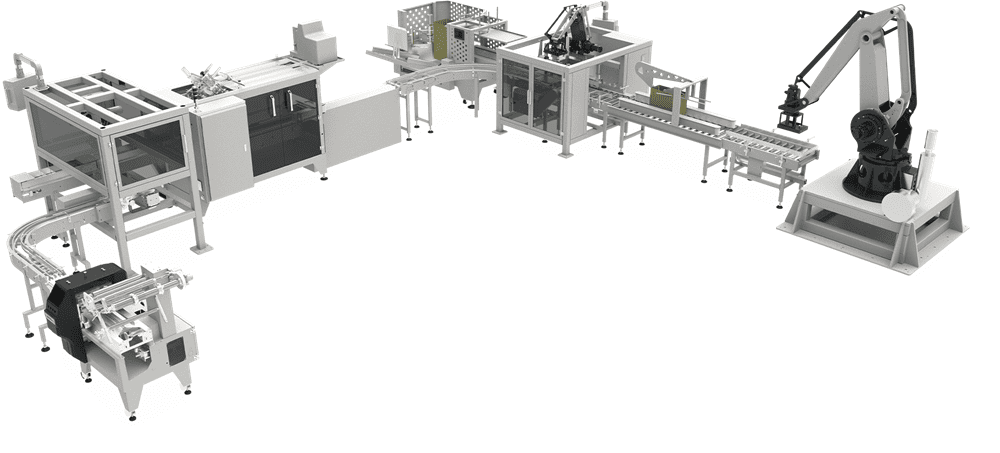
Feeding Systems
- Manual Feeding: Suitable for speeds under 80 ppm.
- Automatic Feeding Systems: For a biscuit packing machine running at 300 ppm, manual feeding is impossible. You need vibratory feeders, belt distribution systems, or robotic pick-and-place units to align products before they enter the wrapper.
Downstream Integration
Your flow wrapper should seamlessly communicate with:
- Check Weighers: To reject underweight packs.
- Metal Detectors: To ensure food safety.
- Secondary Packaging: Connecting to food carton overwrapping machinery or case packers.
Note: Food carton overwrapping machinery is distinct from flow wrapping. Overwrapping folds film around a box (like a cigarette pack), whereas flow wrapping creates a sealed bag (pillow pack) around the product.
7. Total Cost of Ownership (TCO) & ROI Analysis
When calculating the flow packing machine price, smart buyers look beyond the sticker price.
- Film Waste: A Servo-control machine with "No Product No Bag" features can save 10-15% in material costs per year.
- Changeover Time: How long does it take to switch from packing a 100g muffin to a 200g cake? Servo machines with recipe memory can do this in minutes; mechanical machines may take hours of tweaking.
- Maintenance: Motion control components generally have fewer wearing parts (chains, gears, cams) than mechanical systems, reducing maintenance downtime.
The Verdict: For 24/7 production, a higher initial investment in a high-quality, Servo-control Soontrue machine often pays for itself within 12-18 months through efficiency gains.
Conclusion: Making the Right Choice for Your Production Line
Choosing the right horizontal flow packing machine requires a holistic view of your product, your shelf-life goals, and your automation roadmap.
- Choose Rotary if you need speed for candy or snacks.
- Choose Reciprocating if you need MAP for bakery or meat.
- Choose Inverted if your product is soft or sticky.
- Always Choose Servo if you value film savings and operational flexibility.
At Soontrue, we specialize in engineering packaging solutions for chocolate, bakery, and frozen foods that balance high performance with cost-effectiveness.
Ready to optimize your packaging line? Don't guess. Send us your product samples today for a comprehensive Test Run Report. We will help you configure the perfect SZ-Series machine for your business.
FAQ
Q1: What is the difference between HFFS and VFFS?
A: HFFS flow wrap machines (Horizontal Form Fill Seal) transport products horizontally, making them ideal for solid, single items like bread or soap. VFFS (Vertical Form Fill Seal) uses gravity to drop products into a bag, making it better for powders, granules, or liquids.
Q2: Can a flow wrapper handle Modified Atmosphere Packaging (MAP)?
A: Yes, but you typically need a MAP packaging flow wrapper equipped with reciprocating (box motion) sealing jaws. This ensures the dwell time is long enough to create a hermetic seal that keeps the gas inside.
Q3: How do I choose between a mechanical and a Servo-control wrapper?
A: Choose mechanical for simple, low-speed, single-product applications on a budget. Choose servo drives for filling and packaging if you have multiple SKUs, require high speeds, or want to reduce film waste with smart sensors.
Q4: What is a "Pillow Pack"?
A: A pillow pack packaging machine creates a bag with a back seal (fin seal) and two end seals. It is the most common bag style for snacks, bakery items, and flow-wrapped hardware, resembling a pillow shape.